Guides Summer 3 min read
Summer storms are a downpipe test. Will yours pass?
A July cloudburst can drop a month's rain in an hour. Gutters that cope all winter overflow in minutes if one downpipe is half blocked. How to spot it before the storm.
Winter rain is steady. It falls for hours at a rate a gutter and downpipe can carry without trouble, even when they are a little silted. Summer storms are different: a July cloudburst can drop twenty millimetres in half an hour, and every gutter on the house has to empty at its full rated flow.
That is when a downpipe that is half blocked shows itself. The water arrives faster than the pipe can take it, the gutter fills from the outlet end back, and it overflows within minutes.
The hose test
On a dry day, run a garden hose into the far end of each gutter, if you can reach it safely from a first-floor window or a short step, and watch the outlet. Water should reach the downpipe and disappear down it without pooling. If it pools at the outlet, the pipe or the swan neck at the top is partly blocked.
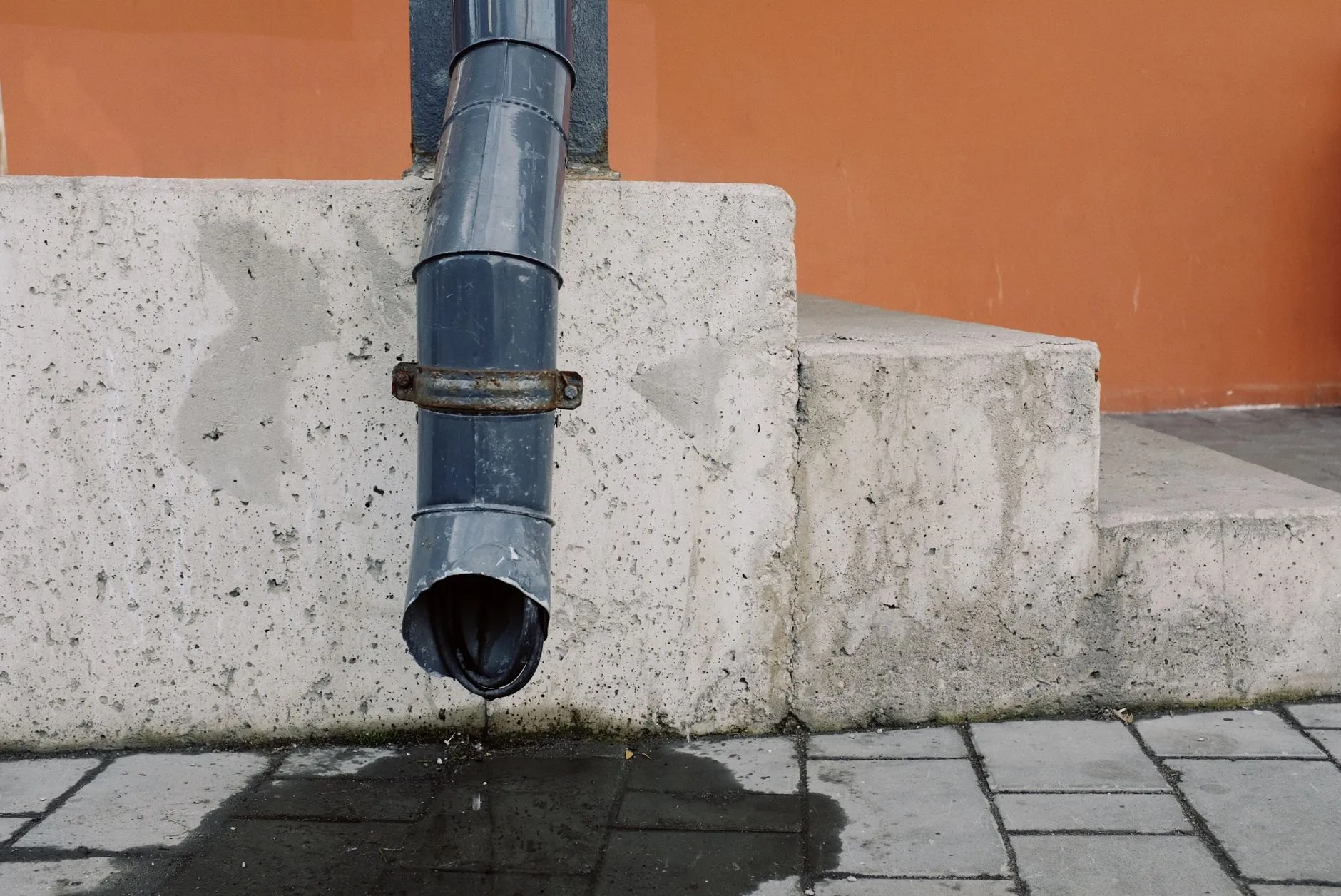
Listen at the bottom of the pipe too. A clear pipe sounds like running water; a partly blocked one gurgles and knocks as air fights its way past the blockage.
Gullies
Most downpipes end in a gully, a small drain with a grid on top. In summer the grid catches blossom, seed and grit swept off the patio. Lift it, scoop it out, and run the hose again. You would be surprised how many “blocked downpipes” turn out to be a blocked gully.
When to call us
If the hose test shows water backing up at an outlet and the gully is clear, the blockage is in the pipe. We rod it from both ends and flush it through for £45 on its own, or £12 a downpipe added to a gutter clean.